

How Modular Kitchen Design Boosts Operational Efficiency
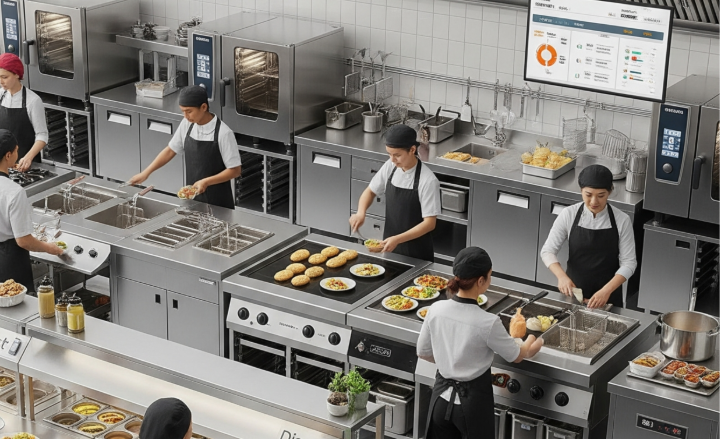
In the fast-paced world of foodservice, efficiency is everything. Whether it’s a bustling quick-service restaurant (QSR), a delivery-first cloud kitchen, or a five-star hotel buffet, operational flow directly impacts customer satisfaction, staff productivity, and bottom-line profitability. That’s where modular kitchen design comes in — a flexible, scalable approach that is redefining how professional kitchens are built and run in India and worldwide.
What Is a Modular Kitchen in the Hospitality Context?
Unlike traditional static kitchens, where equipment is fixed into rigid layouts, a modular kitchen system uses standardized, movable, and customizable units. These can include modular counters, plug-and-play cooking ranges, self-suction grills, induction tops, and even compact refrigeration solutions.
The key idea: every piece of equipment has a function, and every function fits seamlessly into a workflow.
In QSRs and cloud kitchens — where speed and consistency are critical — modularity allows chefs and managers to adapt layouts, add new menu capabilities, or optimize space without costly overhauls.
Why Modular Kitchen Design Matters for Efficiency
1. Optimized Workflow and Reduced Bottlenecks
The success of any kitchen depends on how smoothly tasks flow from prep to cooking to plating. Modular design allows for:
- Straight-line workflows for speed-oriented QSR kitchens.
- U-shaped or island workflows for restaurants with diverse menus.
- Customizable stations (e.g., a separate wok line or bakery counter) to avoid bottlenecks.
The result? Staff can work faster with fewer errors, and service time improves dramatically.
2. Space Utilization in Urban Setups
In metros where real estate is expensive, kitchens often have to function in small footprints. Modular equipment ensures:
- Compact counters with built-in storage.
- Multi-functional ranges (e.g., Teppanyaki that doubles as a live counter).
- Vertical space optimization with refrigeration towers and modular racks.
This maximizes output per square foot — a critical metric for profitable QSR and delivery kitchens.
3. Scalability and Menu Flexibility
Festive season coming up? Planning to add a Pan-Asian menu next quarter? Modular setups make it easy to expand or repurpose existing stations without redesigning the entire kitchen.
This is why many QSR chains and cloud kitchens rely on modularity — it keeps them agile in a market where food trends and customer preferences evolve rapidly.
4. Energy Efficiency and Sustainability
Modern modular equipment integrates advanced technologies such as induction cooking, smart ventilation, and low-energy refrigeration. These:
- Lower utility costs.
- Reduce heat stress in kitchens.
- Align with sustainability goals (critical for hotels and global F&B brands).
5. Ease of Maintenance and Hygiene
One hidden cost in commercial kitchens is downtime due to equipment breakdowns. Modular kitchens minimize this risk because:
- Units can be swapped or serviced individually.
- Stainless steel modular counters and removable panels simplify deep cleaning.
- Compliance with HACCP and FSSAI hygiene norms becomes easier.
6. Better Staff Productivity and Retention
Ergonomically designed modular stations reduce staff fatigue. When chefs don’t waste time walking across cluttered spaces or waiting for equipment, they can focus on what matters: cooking and creating. Over time, this improves morale and retention in a sector already facing high attrition.
Modular Kitchen Equipment That Drives Efficiency
Here are some must-have modular solutions transforming QSRs, restaurants, and institutional kitchens in India:
- HAKSWOK Power Ranges – For high-volume, high-heat Asian cooking.
- Self-suction Teppanyaki Plates – For live counters that double as experiential dining.
- ElCapri Food Holding Trolleys – Keeping dishes warm and mobile, ideal for buffets and banquets.
- Robata & Charcoal Grills – For global menu versatility.
- Compact Bakery Ovens & Induction Ranges – For multi-cuisine QSR formats.
- Modular Cold Rooms & Refrigeration Units – For better stock management in cloud kitchens.
Each of these units can be arranged, moved, or integrated depending on workflow needs, ensuring kitchens grow with the business.
QSR Kitchen Solutions: A Case in Point
Quick-service restaurants (QSRs) are among the fastest-growing segments in India, driven by urbanization, delivery platforms, and evolving consumer habits. For QSRs, speed + consistency = survival.
Modular kitchens support this with:
- Standardized layouts across multiple outlets.
- Faster rollouts of new kitchens (since equipment is pre-engineered).
- Energy-efficient tools that reduce running costs.
- Cloud kitchen adaptability for delivery-first brands.
By combining modular planning with analytics-driven demand forecasting, QSRs can reduce waste, increase throughput, and deliver a more reliable customer experience.
The Future of Modular Commercial Kitchens
The next wave of modular kitchen design will integrate:
- IoT-enabled appliances for real-time monitoring of performance.
- Smart automation to reduce reliance on manual labor.
- Circular economy principles — recyclable materials, zero-waste designs.
- Hybrid setups that combine live counters, cloud kitchens, and central kitchens under one roof.
For India’s hospitality and F&B industry, modularity is not just a design trend — it’s becoming the backbone of future-ready kitchens.
FAQs: Modular Kitchen Design in Hospitality
Q1: What’s the difference between a modular kitchen and a traditional commercial kitchen?
A modular kitchen uses standardized, movable, and scalable units, while a traditional kitchen is fixed and harder to modify.
Q2: How does modular design help QSRs?
It reduces service time, ensures consistent workflows across outlets, and allows quick adaptation to changing menus.
Q3: Is modular equipment more expensive?
Upfront costs can be slightly higher, but long-term savings in energy, maintenance, and scalability make it more cost-effective.
Q4: Can modular setups work for small cafes or bakeries?
Yes — modular systems are highly adaptable and can maximize space in small-format kitchens.
Q5: What role does modular design play in sustainability?
By integrating energy-efficient appliances, better ventilation, and easy maintenance, modular kitchens reduce environmental impact.
From QSR kitchen solutions to high-end hotel buffets, modular kitchen design is reshaping how India cooks and serves. It’s not just about equipment — it’s about creating workflows that maximize productivity, minimize waste, and delight guests.
For any food business aiming to thrive in a competitive, fast-changing market, investing in modular kitchen equipment isn’t optional anymore — it’s the smartest path to operational excellence.
About HAKS
With over three decades of experience, HAKS is India’s trusted partner for commercial kitchen planning, setup, and equipment solutions. From single-outlet cafés to industrial kitchens and hotel buffets, we help brands design kitchens that are modular, efficient, and future-ready.
Contact HAKS
📞 Call: +91-9810571068 | +91-9560085328
📧 Email: info@haks.co.in | sales@haks.co.in
📍 Visit: HAKS Experience Centre – B-56, 1st Floor, Naraina Industrial Area Phase-2, New Delhi – 110028